
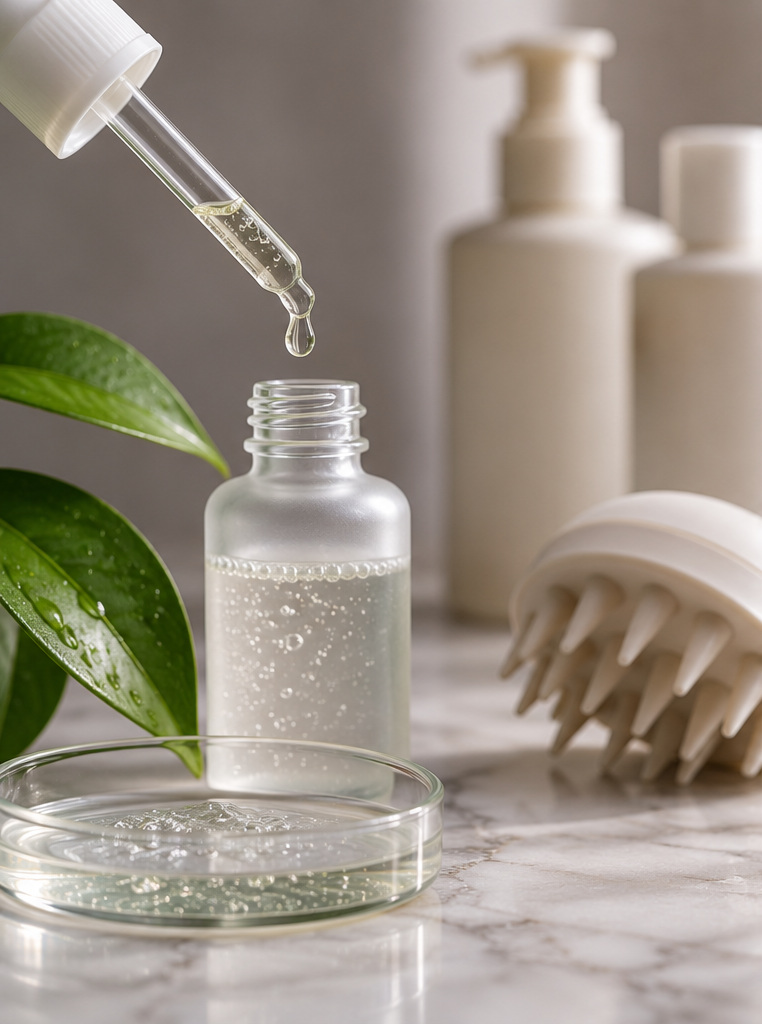
For decades, haircare focused on what consumers could see: shine, smoothness, volume, breakage and frizz. The scalp was simply where hair grew, unless something obvious like dandruff went wrong.
That’s changing. Consumers now approach the scalp with the curiosity they once saved for facial skincare. Scalp serums, exfoliating treatments, and barrier-conscious formulas are all part of a wider conversation about hair health.
South African category research identifies scalp health as an emerging consumer priority and expects it to keep driving haircare innovation. Globally, ingredient-led routines and scalp treatments are also gaining momentum.
Adding the word “scalp” to another bottle won’t be enough, though. The scalp is a complex environment to formulate for, and good scalp care product development starts with understanding it.
The Scalp Is Skin, With Its Own Rules
The scalp has a high density of hair follicles and sebaceous glands. It sits under hair that traps heat, sweat, sebum and product residue. It also hosts a diverse community of microbes that recent reviews link to barrier integrity, sebum metabolism, and immune regulation.
That doesn’t mean every scalp product should make microbiome or hair-loss claims. It means the scalp deserves deliberate formulation, not treatment as an extension of the hair fibre. Many products have to solve two problems at once: what happens on the skin, and what happens to the hair growing through it.
Haircare Has Traditionally Been Fibre-First
A conditioner is a good example. Its main job is to improve how the hair feels and behaves: slip, detangling, softness and less friction.
A scalp product may have a completely different brief. It might need to remove excess oil without leaving the scalp feeling stripped, support hydration, reduce the look of flaking, clear product build-up, or simply keep the scalp comfortable within a normal wash routine.
Each objective changes the ingredients, format and instructions for use. As brands see this, haircare becomes less about another shampoo-and-conditioner pair and more about the whole environment the hair grows in.
Why Scalp Care Is Growing Now
Consumers Understand Ingredients Better
Ingredient knowledge built through skincare is spreading into haircare. Consumers look for acids, peptides, ceramides and botanical extracts, not just a fragrance or hair type on the label. Beauty analysts describe haircare as increasingly ingredient-led, with more attention on scalp health and underlying concerns rather than styling results alone.
Hair Wellness Is Becoming More Holistic
Healthy hair now includes cleansing habits, scalp oiling, heat damage, breakage, scalp comfort, and build-up as part of one routine. Beauty trackers also report growing interest in scalp serums and scalp oiling, alongside hair strength and personalised care.
South African Routines Need Their Own Thinking
Local research identifies both scalp health and texture-specific formulation as important haircare developments, alongside the continued influence of the natural-hair movement. A scalp product for South Africa can’t assume everyone washes daily, wears their hair the same way or follows the same styling routine. We come back to this below.
The Scalp Creates a Different Cleansing Problem
A shampoo must remove enough sebum, sweat, dirt, and styling residue to leave the scalp and hair clean. But stronger cleansing isn’t automatically better. Harsh systems can leave some people dry or uncomfortable, while a product that’s too mild may not cut through the oils, waxes, silicones, and styling products in a particular routine.
So the formula needs to answer:
- Who is using it?
- What do they put on their hair and scalp between washes?
- How often do they wash?
- What kind of build-up should it remove?
These questions matter most where hair oils, edge control, styling creams, protective styles or infrequent washing are common. A shampoo for oily scalps washed often and a clarifying product for occasional deep cleans shouldn’t be designed the same way.
Scalp Oil Isn’t the Enemy
Sebum is a normal part of the scalp. Many simplistic product concepts start from “oil is bad, so remove as much as possible”. The reality is more nuanced than that.
Excess sebum can contribute to an unbalanced scalp and may interact with microbes, residue and visible flaking. Research into dandruff points to links between sebum, barrier disruption, inflammation and microbial balance. But stripping the scalp indiscriminately isn’t the answer either. The goal is cleansing that suits the intended user.
What About the Scalp Microbiome?
This is one of the most interesting areas in scalp care, and one of the most easily over-marketed.
The scalp hosts bacteria and fungi, including species of Malassezia, Cutibacterium and Staphylococcus. Researchers are exploring how changes in this community relate to barrier function and scalp conditions. The science is promising and still evolving.
That doesn’t mean a shampoo should claim to “balance the scalp microbiome”. Claims like that need solid substantiation. The more useful lesson is that cleansing strength, pH, preservatives, actives and frequency of use all affect a living environment, and your formulation decisions should reflect that.
Scalp Serums Need More Than a Facial-Serum Concept
Scalp serums are one of the clearest growth formats, but they raise questions a facial serum never has to answer:
- Can it get through dense hair to the scalp?
- Will it leave roots greasy?
- How much is needed per application?
- How quickly does it dry?
- Is it for daily use or occasional treatment?
A brilliant formula can still fail commercially if people hate applying it. The scalp is harder to reach than the face, so format and packaging matter as much as the ingredient story.
Exfoliation Needs Restraint
Facial acid exfoliation has naturally sparked interest in scalp exfoliation, and products that help lift build-up or loosen surface flakes play a logical role. But the scalp shouldn’t become another place where “stronger” means “better”. Chemical exfoliants, physical scrubs and strong cleansers all need to be balanced against how often they’re used, the consumer’s scalp condition and the rest of their routine.
Brands also need to keep a clear line between cosmetic concerns and medical scalp conditions. A cosmetic product can focus on cleansing, appearance, comfort, or routine scalp maintenance. Diagnosing or treating disease is different territory, and that boundary should shape your claims from the start.
Hair Type Changes Everything
This matters especially in the South African market. A product that works perfectly on short, straight hair washed every morning may be impractical for someone wearing braids, locs, curls, coils or another protective style. The formula might be excellent and the usage model completely wrong.
For scalp-focused development, ask:
- Can the product reach the scalp easily?
- Will it build up?
- Does it need rinsing?
- How often will the target consumer realistically wash?
- Can it be used with protective styles?
These questions can shape the entire formulation brief, since local innovation must start with local routines.
Scalp-Care Formats Worth Exploring
Scalp Serums
Leave-on products built around hydration, soothing, scalp conditioning or another clearly defined goal.
Scalp Oils
Oils already play a big role in many routines. The opportunity is a formula with a clear purpose, a pleasant feel and easy application.
Clarifying Shampoos
Designed to remove residue and build-up, with a deliberate cleansing profile.
Gentle Frequent-Use Cleansers
For people who wash often, mildness and scalp comfort matter most.
Exfoliating Scalp Treatments
Built to lift build-up or visible flakes, with careful thought about frequency and ingredients.
Pre-Shampoo Treatments
Room for conditioning, oil treatments or scalp preparation before cleansing.
Scalp Mists and Tonics
Light application for consumers who want to reach the scalp without heavy residue.
You don’t need to launch every format. Find the one that solves the problem with the least effort for the user.
Be Careful With Hair-Growth Claims
Scalp health and hair growth sit close together in consumers’ minds, which creates temptation. A scalp-conditioning product can quickly end up marketed as “stimulates growth”, “prevents hair loss” or “regrows thinning hair”. Those are much stronger claims.
Hair loss has many possible causes, some of them medical and well beyond the reach of a cosmetic formula. Even research into the scalp microbiome and alopecia describes a complex picture involving barrier biology, immune pathways and follicle function.
If your product cleanses the scalp, say so. If it supports scalp hydration or conditioning, build your evidence around that. A credible claim you can support will serve your brand far longer than an ambitious one you can’t.
What Belongs in a Scalp-Care Product Brief?
What scalp concern are we designing for?
Oiliness, build-up, a dry-feeling scalp, visible flaking or general conditioning? Without a defined problem, a product usually becomes a collection of fashionable ingredients.
Is it rinse-off or leave-on?
This choice affects almost everything else.
Who is the consumer?
Hair texture, styling routine, wash frequency and likely usage all matter.
How often will it be used?
Daily, weekly, between washes or as an occasional treatment?
What should happen to the hair?
A scalp product still affects root feel, volume, residue and manageability.
What claims do we want to make?
Decide early, so the formulation and testing strategy can support them.
From Haircare Range to Hair-and-Scalp System
There’s clear commercial momentum behind scalp care. Local research expects it to keep shaping haircare innovation, and broader beauty research sees the scalp as one of the least developed areas for science-led products.
That doesn’t mean every brand needs a scalp serum. The bigger shift is how we understand haircare. Instead of asking only “what will make the hair look better?”, brands are asking, “What environment are we creating for both the scalp and the hair?”
That question can reshape a whole range. A conventional line-up might be shampoo, conditioner, mask and styler. A hair-and-scalp system could split the routine differently: cleanse the scalp, condition the fibre, treat a defined concern, then protect or style. Each product gets a clearer job, and you avoid cramming every benefit into one shampoo.
Beyond Shampoo: The Real Opportunity
Scalp care is reshaping haircare because consumers care more about what happens before the visible strand. But this isn’t just skincare moving upward. The scalp has its own biology, hair has its own needs, routines vary widely, application is harder, and claims need careful limits.
That’s exactly what makes it worth formulating for. Brands that take the time to understand their consumers, rather than copying the trend, can create more purposeful products, stronger routines and real differentiation.
As a haircare manufacturer in South Africa, Emulcfy formulates haircare alongside skincare and body care, including shampoos, conditioners, and treatments.
Frequently Asked Questions
Why is scalp care becoming more popular?
Consumers are taking a more holistic view of hair health, paying closer attention to ingredients, scalp condition, build-up and the environment hair grows in. South African market research identifies scalp health as an emerging haircare priority.
Is the scalp the same as facial skin?
Both are skin, but the scalp has a high density of hair follicles and sebaceous glands, is covered by hair and hosts its own microbiome. Products need to be developed to address these conditions.
What types of scalp-care products can brands develop?
Scalp serums, tonics, oils, clarifying shampoos, gentle cleansers, exfoliating treatments and pre-shampoo products.
Can a cosmetic scalp product claim to regrow hair?
Be cautious. Hair-growth and hair-loss claims go beyond typical cosmetic positioning and may require stronger substantiation or different regulatory consideration.
Does hair texture matter when developing scalp products?
Yes. Density, texture, styling habits, protective styles, wash frequency and product layering all affect how easily a scalp product can be applied and whether it leaves residue.
Does Emulcfy develop haircare products?
Yes. We develop and manufacture custom and pre-formulated skincare, body care and haircare.
Developing a Scalp or Haircare Product?
Start with your consumer’s real routine: their hair, their scalp, how often they wash, what they already use and what your new product needs to do. Then the ingredients, format and experience can be built around a real purpose.
Book a formulation call to talk through your scalp-care or haircare concept and the development route that suits your brand.